The coffee table is often the unsung hero of the living room. Positioned at the literal and figurative center of your seating area, it bridges the gap between style and everyday functionality. It holds morning coffee cups, displays curated art books, supports footrests during evening movie marathons, and acts as a anchor for your overall interior aesthetic.
Choosing the right coffee table involves balancing proportion, spatial scale, material durability, lifestyle needs, and design principles. A table that is too large will restrict traffic flow, while one that is too small will feel lost and functionally useless. By systematically evaluating your living space and daily habits, you can select a coffee table that elevated your interior space while serving your practical needs for years to come.
Measuring for Proper Proportions and Spatial Clearance
Before exploring styles, finishes, or materials, you must establish the exact dimensional parameters required for your room layout. Accurate measurements prevent common spatial layout mistakes and ensure that your living area remains comfortable and easy to navigate.
Ideal Height Alignment
The height of your coffee table should always be dictated by the surrounding seating. As a general rule, choose a coffee table that is the exact same height as your sofa cushions or one to two inches lower. Standard sofa seat heights range from 16 to 18 inches, making the average ideal coffee table height roughly 16 to 18 inches tall. Selecting a table that sits higher than your sofa seat creates an awkward visual line and makes reaching down for items uncomfortable. Lower profile tables, around 12 to 15 inches high, work exceptionally well in modern, minimalist, or Japanese-inspired low-seating arrangements.
Optimal Length and Scale
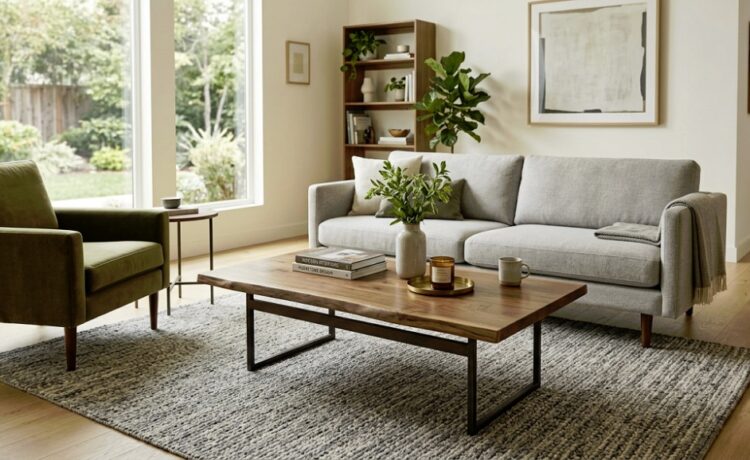
To maintain visual harmony, the length of your coffee table should measure approximately two-thirds the total width of your sofa. For instance, if you have an 84-inch sofa, look for a coffee table that spans around 56 inches in length. A table that extends too close to the ends of the sofa makes the arrangement look cramped, while a table shorter than half the sofa length feels undersized and detached.
Spatial Clearance Rules
Comfortable movement through a living room requires generous clearance zones around furniture pieces:
-
Distance to Sofa: Leave between 14 and 18 inches of clearance between the front edge of the sofa cushions and the edge of the coffee table. This gap provides enough legroom to sit down comfortably while keeping the table surface within easy reach.
-
Distance to TV Console or Secondary Furniture: Maintain a minimum distance of 30 to 36 inches between the coffee table and secondary elements like TV media cabinets, fireplaces, or accent chairs. This ensures walkways remain clear for daily foot traffic.
Selecting the Right Shape for Your Seating Layout
The structural shape of your coffee table dictates spatial flow and complements your sofa style. Different shapes solve specific functional challenges within living room footprints.
Rectangular Tables
Rectangular tables are classic and versatile. They work best with standard long sofas, wide three-seater couches, or symmetrical seating configurations. A rectangular shape provides ample surface area for decor and entertaining while mirroring the elongated lines of traditional living rooms.
Round and Oval Tables
Round and oval coffee tables soften the hard angles of boxy living rooms and long sofas. They are ideal for households with young children or pets, as they eliminate sharp corners along traffic pathways. Round tables work exceptionally well with L-shaped sectional sofas, nested in the inner bend to create an inviting conversational circle.
Square Tables
Square coffee tables create a strong focal point in large, open-concept spaces. They fit seamlessly into large L-shaped or U-shaped sectional setups where seating is equally distributed on multiple sides. If a single large square table feels too dominant, pairing two smaller square tables side-by-side offers modular flexibility.
Nesting and Abstract Shapes
Nesting tables feature two or three overlapping units that can be pulled apart during social gatherings and tucked together to save floor space daily. Abstract or organic shapes add artistic flair and smooth out movement in compact or irregularly shaped rooms.
Evaluating Durable Furniture Materials
Material choice influences both the visual weight of the coffee table and its long-term maintenance requirements. Consider how much wear and tear the table surface will face on a daily basis.
-
Solid Hardwood: Classic choices like solid oak, walnut, and maple bring organic warmth, grain depth, and structural longevity. Solid wood withstands daily family use and can be refinished if scratched.
-
Glass and Acrylic: Glass-topped or clear acrylic tables reflect natural light and create a sense of weightlessness. They are perfect for small, dark, or narrow rooms because they do not block line of sight across the floor plane.
-
Metal: Powder-coated steel, iron, or brushed brass frames offer structural strength and sleek profiles. Metal components resist heavy impacts, making them suitable for modern, industrial, or high-traffic environments.
-
Natural Stone and Marble: Marble, granite, and travertine offer luxurious textures and unique natural patterns. Stone tables are durable against heat but require regular sealing to protect against stains caused by spills.
-
Upholstered Ottoman Tables: Plush, fabric- or leather-covered ottomans serve as comfortable footrests and casual seating. Pairing an ottoman with a flat decorative tray creates a stable surface for drinks and decor.
Aligning Functionality with Lifestyle Needs
Your daily routines should heavily influence the features you look for in a coffee table.
If your living room doubles as an office or casual dining area, consider a lift-top coffee table mechanism. These internal mechanisms raise the tabletop surface to comfortable working height while revealing hidden interior storage compartments.
For homes prone to clutter, coffee tables equipped with lower display shelves, built-in drawers, or hollow interior storage help keep remotes, magazines, and board games organized. In homes with tight spatial constraints, lightweight nesting tables or options on locking casters provide quick adaptability for entertaining or workout routines.
Frequently Asked Questions
Should a coffee table match the wood finish of my other living room furniture?
Your coffee table does not need to match your other furniture pieces precisely. Mixing wood tones creates a layered, curated look. The key is to match undertones, such as pairing warm woods with other warm tones, or ensuring there is enough contrast, like pairing a dark walnut table with light oak accents, so the combination looks deliberate.
Is an ottoman better than a traditional coffee table for families with kids?
Upholstered ottomans are often a safer choice for families with toddlers because they lack sharp corners and hard edges. They also provide comfortable extra seating. Adding a sturdy tray on top gives you a flat surface for drinks while keeping the soft, child-friendly base intact.
How do I style a large coffee table surface without making it look cluttered?
Follow the rule of threes and use varying heights to anchor your styling. Divide the table surface into visual quadrants or place items on a decorative tray. Combine a tall element like a vase with flowers, a medium element like a stack of art books, and a low element like a decorative bowl or scented candle.
What is the best coffee table shape for an L-shaped sectional sofa?
Round or square coffee tables work best with L-shaped sectionals. A round table fits neatly into the inner corner of the sofa, making it easy to access from all seats while keeping walkways clear. A square table fills the inner space evenly if the sectional has equal lengths on both sides.
How can I protect a stone or marble coffee table from permanent stains?
Apply a high-quality penetrating stone sealer once or twice a year to prevent liquids from soaking into porous stone surfaces. Always use coasters under glasses and mugs, and clean up spills from coffee, wine, or citrus juices immediately using a pH-neutral cleaner.
Can a coffee table be longer than the sofa it sits in front of?
No, a coffee table should never be longer than the sofa. A table that exceeds the length of the sofa creates awkward proportions and blocks movement into the seating area. Keep the table length between one-half and two-thirds of the total sofa width for balanced proportions.
How do I choose a coffee table for a very small living room?
For a small space, look for a coffee table with exposed legs, a glass or acrylic top, or a nested design. Open bases allow light to pass through, making the room feel less crowded, while nesting tables can be tucked away when floor space is needed for movement.